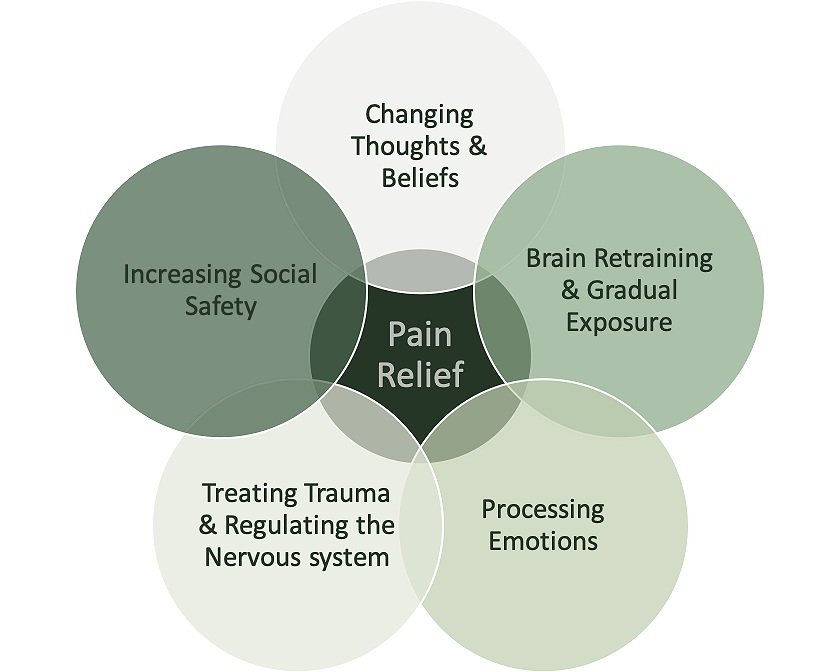
Pain Reprocessing Therapy (PRT) is a system of psychological and somatic techniques that retrains the brain to accurately interpret and respond to signals from the body, breaking the cycle of chronic pain. Although various treatments aim to manage pain, PRT stands apart as an evidence-based treatment to eliminate pain. This is a complete paradigm shift in the way we understand pain and is based on recent scientific studies which have demonstrated complete and long-lasting recovery from pain.
Core Ideas Behind PRT:
Chronic pain is often neuroplastic—meaning it’s maintained by the brain, even when no tissue damage is present. By changing thoughts, emotions, and responses to pain, the brain can be retrained to stop generating unnecessary pain signals.
How PRT Works:
Education: Patients learn that their pain may be caused by the brain’s neural pathways, not structural damage. Somatic Tracking: A mindfulness-based technique where patients notice pain in a calm, curious way without fear, helping to reduce threat signals. Cognitive Reappraisal: Challenging and shifting fear-based beliefs about pain. Emotional Processing: Exploring suppressed emotions that might contribute to the brain’s pain response.
What It’s Used For:
- Chronic back pain
- Neck pain
- Fibromyalgia
- Tension headaches
- Other medically unexplained pain syndromes
Research:
PRT was tested in a 2021 study published in JAMA Psychiatry, which found that two-thirds of participants with chronic back pain were pain-free or nearly pain-free after treatment.